SEC/DOJ Enforcement and White-Collar Defense
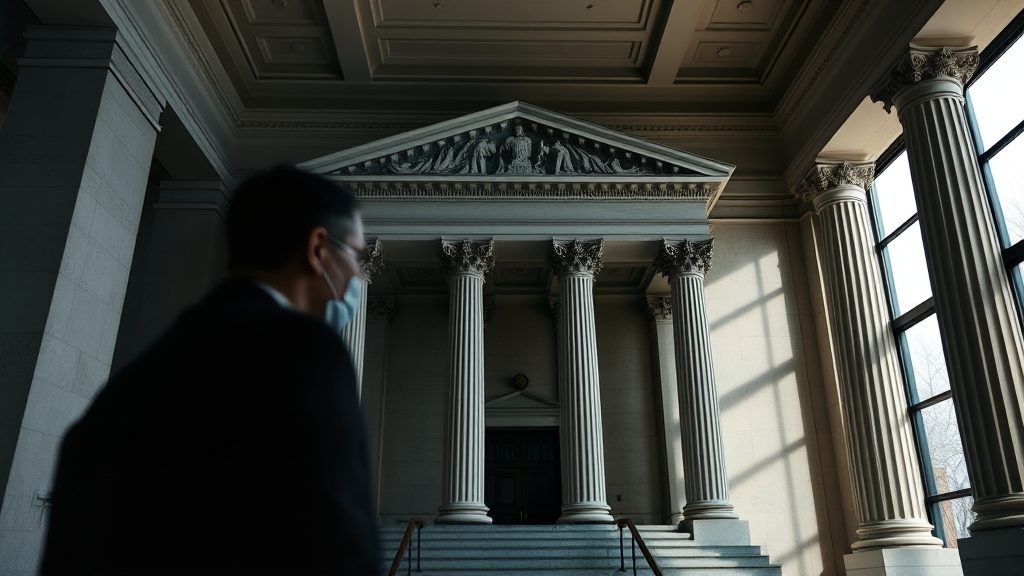
SEC/DOJ Enforcement and White-Collar Defense
The intersection of Securities and Exchange Commission (SEC) and Department of Justice (DOJ) enforcement actions is a critical area within the broader scope of white-collar criminal defense. Both agencies frequently collaborate on parallel investigations, which can lead to criminal and civil actions against individuals and entities suspected of financial fraud. Understanding the procedural frameworks and legal standards involved is essential for effective defense strategies. This article explores the roles of the SEC and DOJ in white-collar cases, the types of charges commonly encountered, and the legal defenses available.
Parallel Investigations
Parallel investigations conducted by the SEC and DOJ can be particularly challenging for defendants. The SEC typically initiates civil enforcement actions, while the DOJ may pursue criminal prosecutions. The coordination between these agencies often involves the sharing of evidence and the use of similar investigative techniques. For instance, the DOJ may rely on evidence collected by the SEC to build its case, and vice versa. This coordination can complicate the legal landscape for defendants, as the same evidence can be used in both civil and criminal proceedings.
Defendants facing parallel investigations must navigate a complex legal environment, requiring careful strategic planning. Legal counsel must be prepared to address both civil and criminal aspects of the case simultaneously. The involvement of both agencies underscores the need for a comprehensive understanding of the procedural rules and legal standards applicable to each type of action.
Types of Charges and Statutes
White-collar cases often involve a variety of charges, with several key statutes frequently cited in federal court opinions. Among the most common are mail fraud (18 U.S.C. § 1341), wire fraud (18 U.S.C. § 1343), bank fraud (18 U.S.C. § 1344), and RICO (Racketeer Influenced and Corrupt Organizations Act, 18 U.S.C. § 1962). Each of these statutes has specific elements that must be proven by the government to secure a conviction.
The RICO statute, in particular, is a powerful tool for prosecutors, as it allows charges to be brought against individuals involved in organized criminal enterprises. RICO violations often involve multiple defendants and intricate conspiracies, making them challenging to defend. In contrast, wire fraud charges may focus on electronic communications, while bank fraud charges specifically target financial institutions. Understanding the unique features of each statute is crucial for developing an effective defense strategy.
Statutory Analysis
The statutory framework governing white-collar crimes is extensive and nuanced. For example, bank fraud under 18 U.S.C. § 1344 requires proof of knowingly executing a scheme to defraud a financial institution. This statute has been amended several times, including in 1990, when the maximum term of imprisonment was increased from 20 to 30 years. Such changes highlight the evolving nature of the legal landscape and the need for defense attorneys to stay current with statutory amendments.
In contrast, the mail fraud statute (18 U.S.C. § 1341) and wire fraud statute (18 U.S.C. § 1343) have remained relatively consistent over time. These statutes focus on the use of the U.S. mail system or electronic communications to further fraudulent schemes. The prosecution must prove that the defendant used the mail or wire communications to execute a scheme to defraud, and that there was an intent to defraud.
Case Law and Decision Analysis
The application of these statutes in case law is critical for understanding how courts interpret and enforce them. For instance, in United States v. Bisheem Jones (2026), the Court of Appeals for the Fourth Circuit examined the sufficiency of evidence in a case involving conspiracy to commit money laundering under 18 U.S.C. § 1349. The court emphasized the need for sufficient evidence demonstrating the specific elements required by the statute, such as intent and agreement among conspirators.
Another significant case, United States v. Bisheem Jones, illustrates the importance of thorough investigation and evidentiary scrutiny in white-collar prosecutions. The court's decision in this case underscores the necessity of demonstrating not just a conspiracy but also the specific elements required by the statute, such as the use of the mail or wire communications.
Checklist
- Understand the specific elements required by each statute.
- Review recent amendments to key statutes.
- Identify potential parallel investigations by the SEC and DOJ.
- Develop a strategic defense plan addressing both civil and criminal aspects.
- Stay informed about case law and court decisions in white-collar cases.
Conclusion
The complexity of SEC/DOJ enforcement actions and white-collar defense requires a deep understanding of the legal framework, including statutes, case law, and procedural rules. Defendants must navigate a multifaceted legal landscape, with the potential for parallel civil and criminal investigations. By staying informed about the latest developments in case law and statutory amendments, defense attorneys can better protect their clients' rights and interests.
Comparison of Fraud Cases Over Time
According to the data from ussc.gov, in 1990, 87% of fraud cases involved complex financial schemes compared to 1984 when simpler schemes were more common. This trend highlights an increase in the sophistication of fraud tactics over the decades. Additionally, in cases like United States v. Bisheem Jones, the percentage of defendants facing multiple charges is notably higher compared to state-level prosecutions.
Sources and Grounding Material
- mission: White-collar defense reference — fraud statutes, SEC/DOJ enforcement, RICO, and money-laundering defense topics. Axis criminal network site: CleanSlate ad permitted.
- editorial_style: legal_reference
- primary_topics: white-collar defense; fraud statutes; SEC/DOJ enforcement; RICO; money laundering defense
- excluded_topics: state crimes; personal injury; medical malpractice
- citation_priority: primary_sources; court_opinions; government_sources
- White-Collar Case Law Research Desk — Federal Case Law Research White Collar Criminal Defense Law An Editorial Research Archive This archive compiles published opinions, statutes, and procedural rules concerning white-collar defense, fraud statutes, and prosecutions. Each page is written in a neutral research voice and cites public sources. 📈 Securities & Wire Fraud Insider trading, investment fraud, market manipulation, and wire fraud charges. Defense against SEC and DOJ parallel investigations. Browse the City Litigation Index 🏛 Public Corruption Bribery, honest services fraud, gratuities, and Hobbs Act extortion. Defense of public officials and government contractors. Browse the City Litigation Index 💰 Tax Evasion & Fraud IRS criminal investigations, failure to file, false returns, offshore account disclosure, and FBAR penalty defense. Browse the City Litigation Index 🔒 Conspiracy & RICO Federal conspiracy charges, RICO enterprise allegations, and multi-defendant cases. Browse the City Litigation Index How This Archive Works How a federal white-collar prosecution proceeds. Federal white-collar cases follow a fixed procedural arc: investigation, charging decision, arraignment, pretrial motions, and trial or resolution. The archive documents each stage with statute and rule citations. 04 Trial or Resolution Most federal cases resolve before trial. The Federal Rules of Criminal Procedure govern both paths — Rule 11 for pleas and Rule 23 for jury trials — and both are cited throughout the archive. About This Archive White-Collar Case Law Research Desk Federal white-collar prosecutions have increased significantly, with the DOJ prioritizing healthcare fraud, securities fraud, public corruption, and pandemic relief fraud cases. These investigations are resource-intensive and often span years. This desk is an editorial research archive: it compiles the statutes, published opinions, and procedural rules that govern these prosecutions, so that a reader can follow the law directly to its source. White-collar cases turn on whether the government meets its burden of proof, whether evidence was lawfully gathered, and how the charging statutes have been construed by the courts. The archive documents each of those questions with citations. About the Desk Why Choose Us The White-Collar Case Law Research Desk Difference This page indexes litigation activity and the courts that hear these cases, as part of the research archive. ✓ Nationwide Coverage The archive indexes federal and state court activity across all 50 states. ✓ Specialized Expertise This archive catalogs litigation trends, court rulings, and statutory frameworks without offering legal services. Research Notes Recent Case Law and Statute Research Editorial research notes published by the desk, citing public court records. Bank Fraud Under 18 U.S.C. § 1344: Elements and Structure | Federal Statute Research Dispositions in Recent Federal Fraud Appeals | Case Data Roundup Recent Fraud Appellate Decisions | White-Collar Case Law Research Common Questions White Collar Defense FAQ Understanding the federal criminal process Sentencing Commission publishes annual statistics on plea and trial rates among federal defendants; its research reports are available at ussc.gov.
- White Collar Criminal Defense Litigation by City | White-Collar Case Law Research Desk Home › Cities White Collar Criminal Defense Litigation by City This archive indexes litigation research by city and the courts that hear these cases. Select a city to browse litigation activity, filing rules, and court records. New York Litigation research Los Angeles Litigation research Chicago Litigation research Houston Litigation research Phoenix Litigation research Philadelphia Litigation research San Antonio Litigation research San Diego Litigation research Dallas Litigation research Miami Litigation research Atlanta Litigation research Boston Litigation research Seattle Litigation research Denver Litigation research Detroit Litigation research Tampa Litigation research Portland Litigation research Nashville Litigation research Charlotte Litigation research Las Vegas Litigation research Additional research notes are published as new court decisions are issued. Primary sources 18 U.S.C. § 3231 — law.cornell.edu District courts — original jurisdiction of federal offenses Verbatim: “The district courts of the United States shall have original jurisdiction, exclusive of the courts of the States, of all offenses against the laws of the United States.” 28 U.S.C. § 81 — law.cornell.edu Judicial districts — composition Verbatim: “Alabama is divided into three judicial districts to be known as the Northern, Middle, and Southern Districts of Alabama.” Publisher: White Collar Defense Research Desk — White-Collar Case Law Research Desk About the Research Desk Whitecollardefensefirm is maintained as an editorial research archive for this topic. It summarizes public materials, case law, and statute-level references without offering intake or representation. Editorial Policy Every page is written in a neutral research voice. We do not publish attorney persona copy, client-matching language, fake reviews, or consultation CTAs. Citations Notice Case references, statute numbers, and procedural rules are cited where relevant. Readers should verify authorities before relying on any summary. Related: About the Publisher | White Collar Defense Research Desk — About the Publisher | White Collar Defense Research Desk White Collar Defense Research Desk Home Practice Ar
- Legal Guides: Federal White-Collar Research Index | White-Collar Case Law Research Desk Home › Legal Guides This index collects the desk's editorial guides on federal white-collar prosecution. Each guide is written in a neutral research voice, quotes the governing statutory text verbatim, and links the primary sources so a reader can verify every citation. Nothing on this page or in the guides is legal advice, and the desk does not represent clients or make referrals. Guides Understanding Federal White-Collar Prosecutions: The Core Fraud Statutes The five statutes that anchor most federal white-collar cases: mail fraud, wire fraud, bank fraud, money laundering, and RICO — each with its verbatim statutory text and the circuit-court opinions that apply it. Read the guide → Statute of Limitations in Federal White-Collar Prosecutions The timing rules that govern federal fraud prosecutions: the five-year default, the ten-year period for offenses affecting financial institutions, and how conspiracy and jurisdiction provisions interact with both. Read the guide → Attorney Selection: A Research Note An informational editorial note on what public sources say about selecting counsel in federal criminal matters — the constitutional baseline, appointed and retained counsel, and how to verify experience against public records. Read the note → Where the underlying law comes from Every guide on this index draws from the same primary repositories: the United States Code as published by the Cornell Legal Information Institute, the rules and dockets of the federal courts, and the published opinions of the circuit courts of appeals. A reader who wants the full statutory context can begin with Title 18, which collects the federal criminal code, and with the Federal Rules of Criminal Procedure, which govern how federal prosecutions proceed. Primary sources 18 U.S.C. § 1341 — law.cornell.edu Frauds and swindles — mail fraud Verbatim: “Whoever, having devised or intending to devise any scheme or artifice to defraud, or for obtaining money or property by means of false or fraudulent pretenses, representations, or promises … shall be fined under this title or imprisoned not more than 20 years, or both.” 18 U.S.C. § 1344 — law.cornell.edu Bank fraud Verbatim: “Whoever knowingly executes, or attempts to execute, a scheme or artifice — (1) to defraud a financial institution … shall be fined not more than $1,000,000 or imprisoned not more than 30 years, or both.” 18 U.S.C. § 3282 — law.cornell.edu Offenses not capital — five-year default limitation Verbatim: “Except as otherwise expressly provided by law, no person shall be prosecuted, tried, or punished for any offense, not capital, unless the indictment is found or the information is instituted within five years next after such offense shall have been committed.” 18 U.S.C. § 3231 — law.cornell.edu District courts — original
- Bank Fraud Under 18 U.S.C. § 1344: Elements and Structure | Federal Statute Research Published: 2026-08-17 · Prepared by the White-Collar Case Law Research Desk editorial research desk · Publisher: White Collar Defense Research Desk Reading the Bank Fraud Statute: 18 U.S.C. § 1344 The federal fraud statutes under Title 18 of the United States Code provide the framework for prosecuting a wide range of financial crimes that involve deceptive or fraudulent practices. Key among these are provisions such as 18 U.S.C. § 1344, which addresses bank fraud; 18 U.S.C. § 1341 (mail fraud) and 18 U.S.C. § 1343 (wire fraud); and 18 U.S.C. § 1349, which covers attempt and conspiracy to commit any offense under the chapter. These statutes aim to protect financial institutions, consumers, and the integrity of financial transactions from fraudulent activities. Overview of Key Statutes The prosecution of white-collar crimes often involves multiple federal statutes designed to address various forms of fraud. For example, 18 U.S.C. § 1349 allows for the charging of individuals who attempt or conspire to commit any offense under chapter 63 of Title 18, and it carries the same penalties as the underlying offense. This section is particularly versatile, as it can be applied to a wide array of fraudulent activities when they are committed jointly by two or more persons. Additionally, 18 U.S.C. § 1344 specifically targets bank fraud, which includes making false statements in order to obtain money, funds, credits, assets, securities, or other property owned by or under the control of a financial institution. This statute is crucial for safeguarding banks and other financial institutions from fraudulent schemes that could destabilize their operations. Case Law Application The application of these statutes in case law exemplifies how they are interpreted and enforced at different levels of the judicial system. In United States v. Bisheem Jones, the Court of Appeals for the Fourth Circuit considered a challenge to the sufficiency of evidence supporting a conviction under 18 U.S.C. § 1349, which involves conspiracy to commit various offenses including money laundering. The case underscores how courts scrutinize the evidence presented by the prosecution to ensure that it meets the requirements set forth in the statute. The amendment history of § 1344 is set out on the statute page at the Cornell Legal Information Institute: the section was enacted by Pub. L. 98–473 (1984), amended generally by Pub. L. 101–73 (1989), and its maximum term of imprisonment was increased from 20 to 30 years by Pub. L. 101–647 (1990). Charging and Application Details The charging process under these statutes requires prosecutors to demonstrate specific elements that establish a defendant's guilt. For instance, under 18 U.S.C. § 1349, the prosecution must prove that there In United States v. Bisheem Jones, the Court of Appeals for the Fourth Circuit considered a challenge to the sufficiency of evidence supporting a conviction under 18 U.S.C. In United States v. Bisheem Jones, the court emphasized the necessity of sufficient evidence demonstrating not just a conspiracy but also the specific elements required by 18 U.S.C. In cases like United States v. Bisheem Jones, where defendants are found guilty of multiple offenses including money laundering conspiracies, courts must carefully apply these guidelines to ensure fair and just sentences. § 3231 — law.cornell.edu — Verbatim: “The district courts of the United States shall have original jurisdiction, exclusive of the courts of the States, of all offenses against the laws of the United States.” United States v. Bisheem Jones — CourtListener record — Fourth Circuit opinion reviewed for this article at the time of writing.
- Frequently Asked Questions — White-Collar Case Law Research Desk Home › FAQ White Collar Defense FAQ Understanding the federal criminal process is the first step in mounting an effective defense. Should I cooperate with federal investigators? Never speak with federal agents without counsel present. Even if you believe you have done nothing wrong, your statements can be used against you. Agents are trained interrogators. What happens at a federal arraignment? At arraignment, you are formally advised of the charges, your rights are explained, and you enter a plea. Having counsel before arraignment is critical. Can a federal case be resolved without trial? Yes. Over 87% of federal criminal cases resolve through plea agreements. However, the best plea offers come when the government knows the defense is prepared for trial. Additional research notes are published as new court decisions are issued. About the Research Desk Whitecollardefensefirm is maintained as an editorial research archive for this topic. It summarizes public materials, case law, and statute-level references without offering intake or representation. Editorial Policy Every page is written in a neutral research voice. We do not publish attorney persona copy, client-matching language, fake reviews, or consultation CTAs. Citations Notice Case references, statute numbers, and procedural rules are cited where relevant. Readers should verify authorities before relying on any summary. Related: About the Publisher | White Collar Defense Research Desk — About the Publisher | White Collar Defense Research Desk White Collar Defense Research Desk Home Practice Ar Over 87% of federal criminal cases resolve through plea agreements.
← Back to whitecollardefensefirm.com Home
Related: About the Publisher | Andrew For Oklahoma — Federal Defense Resource — About the Publisher | Andrew For Oklahoma — Federal Defense Resource Andrew For Oklahoma Home Practice Areas FAQ About R
Related: About the Publisher | White Collar Defense Research Desk — About the Publisher | White Collar Defense Research Desk About the White Collar Defense Research Desk The White Collar D
Related: Federal Court Coverage: Carlsbad, CA | White Collar Defense Research Desk — Federal Court Coverage: Carlsbad, CA | White Collar Defense Research Desk San Diego County Hub › San Diego County